
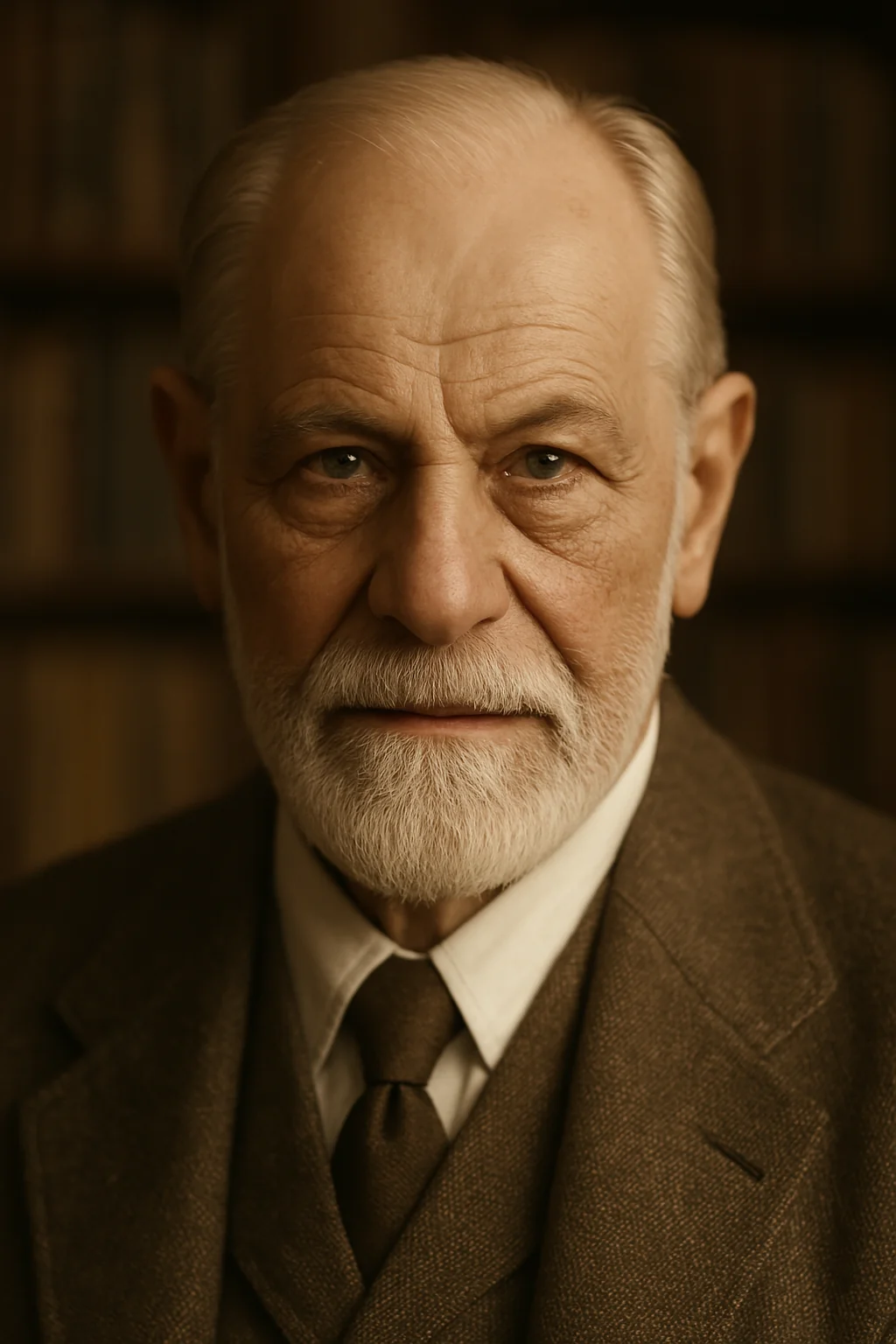
"“It sounds like a fairy-tale, but not only that; this story of what man by his science and practical inventions has achieved on this earth, where he first appeared as a weakly member of the animal kingdom, and on which each individual of his species must ever again appear as a helpless infant... is a direct fulfilment of all, or of most, of the dearest wishes in his fairy-tales. All these possessions he has acquired through culture. Long ago he formed an ideal conception of omnipotence and omniscience which he embodied in his gods. Whatever seemed unattainable to his desires - or forbidden to him - he attributed to these gods. One may say, therefore, that these gods were the ideals of his culture. Now he has himself approached very near to realizing this ideal, he has nearly become a god himself. But only, it is true, in the way that ideals are usually realized in the general experience of humanity. Not completely; in some respects not at all, in others only by halves. Man has become a god by means of artificial limbs, so to speak, quite magnificent when equipped with all his accessory organs; but they do not grow on him and they still give him trouble at times... Future ages will produce further great advances in this realm of culture, probably inconceivable now, and will increase man's likeness to a god still more.”"
— Sigmund Freud
It Sounds Like A Fairy Tale But Not Only That This
“It sounds like a fairy-tale, but not only that; this story of what man by his science and practical inventions has achieved on this earth, where he first appeared as a weakly member of the animal kingdom, and on which each individual of his species must ever again appear as a helpless infant... is a direct fulfilment of all, or of most, of the dearest wishes in his fairy-tales. All these possessions he has acquired through culture. Long ago he formed an ideal conception of omnipotence and omniscience which he embodied in his gods. Whatever seemed unattainable to his desires - or forbidden to him - he attributed to these gods. One may say, therefore, that these gods were the ideals of his culture. Now he has himself approached very near to realizing this ideal, he has nearly become a god himself. But only, it is true, in the way that ideals are usually realized in the general experience of humanity. Not completely; in some respects not at all, in others only by halves. Man has become a god by means of artificial limbs, so to speak, quite magnificent when equipped with all his accessory organs; but they do not grow on him and they still give him trouble at times... Future ages will produce further great advances in this realm of culture, probably inconceivable now, and will increase man's likeness to a god still more.”
Similar Quotes
“Thus, from the war of nature, from famine and death, the most exalted object which we are capable of conceiving, namely, the production of the higher animals, directly follows. There is grandeur in this view of life, with its several powers, having been originally breathed into a few forms or into one; and that, whilst this planet has gone cycling on according to the fixed law of gravity, from so simple a beginning endless forms most beautiful and most wonderful have been, and are being, evolved.”
“...But I own that I cannot see as plainly as others do, and as I should wish to do, evidence of design and beneficence on all sides of us. There seems to me too much misery in the world. I cannot persuade myself that a beneficent and omnipotent God would have designedly created the Ichneumonidæ with the express intention of their feeding within the living bodies of Caterpillars, or that a cat should play with mice... I feel most deeply that the whole subject is too profound for the human intellect. A dog might as well speculate on the mind of Newton. Let each man hope and believe what he can.”
“Those whose acquaintance with scientific research is derived chiefly from its practical results easily develop a completely false notion of the mentality of the men who, surrounded by a skeptical world, have shown the way to kindred spirits scattered wide through the world and through the centuries. Only one who has devoted his life to similar ends can have a vivid realization of what has inspired these men and given them the strength to remain true to their purpose in spite of countless failures. It is cosmic religious feeling that gives a man such strength. A contemporary has said, not unjustly, that in this materialistic age of ours the serious scientific workers are the only profoundly religious people.”
“I believe that if one man were to live out his life fully and completely, were to give form to every feeling, expression to every thought, reality to every dream - I believe that the world would gain such a fresh impulse of joy that we would forget all the maladies of medievalism, and return to the Hellenic ideal - to something finer, richer, than the Hellenic ideal, it may be. But the bravest man amongst us is afraid of himself. The mutilation of the savage has its tragic survival in the self-denial that mars our lives. We are punished for our refusals.”
“I often think that he's the only one of us who's achieved immortality. I don't mean in the sense of fame and I don't mean he won't die someday. But he's living it. I think he is what the conception really means. You know how people long to be eternal. But they die with everyday that passes. . . They change, they deny, they contradict- and they call it growth. At the end there is nothing left, nothing unreveresed or unbetrayed; as if there had never been an entity, only a succession of adjectives fading in and out of an unformed mass. How do they expect a permanence which they never held for a single moment? But Howard- one can imagine him living forever.”
“...when he looks at Beauty in the only way that Beauty can be seen - only then will it become possible for him to give birth not to images of virtue (because he's in touch with no images), but to true virtue [arete] (because he is in touch with true Beauty). The love of the gods belongs to anyone who has given to true virtue and nourished it, and if any human being could become immortal, it would be he.”