
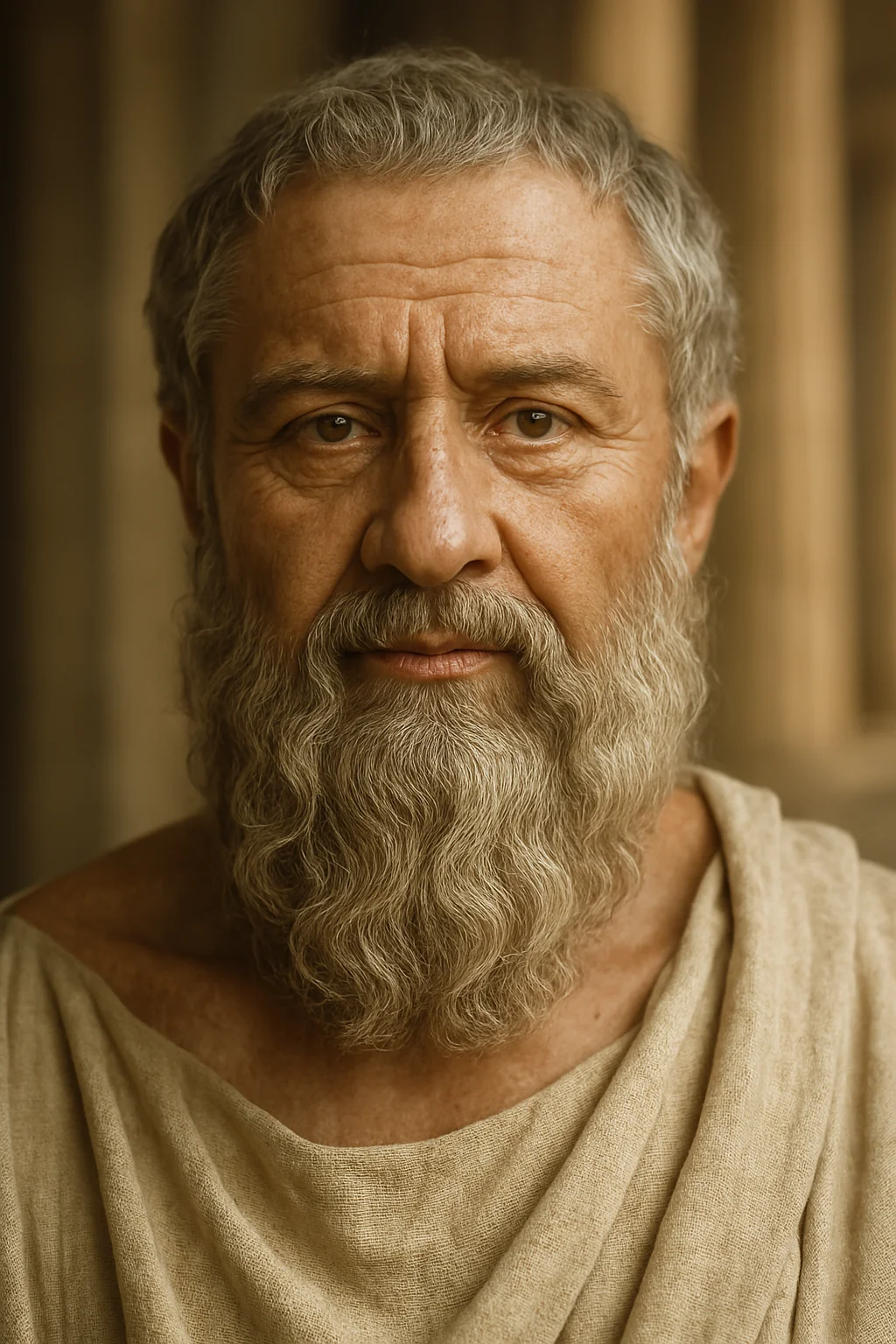
"“...when he looks at Beauty in the only way that Beauty can be seen - only then will it become possible for him to give birth not to images of virtue (because he's in touch with no images), but to true virtue [arete] (because he is in touch with true Beauty). The love of the gods belongs to anyone who has given to true virtue and nourished it, and if any human being could become immortal, it would be he.”"
— Plato
When He Looks At Beauty In The Only Way That
“...when he looks at Beauty in the only way that Beauty can be seen - only then will it become possible for him to give birth not to images of virtue (because he's in touch with no images), but to true virtue [arete] (because he is in touch with true Beauty). The love of the gods belongs to anyone who has given to true virtue and nourished it, and if any human being could become immortal, it would be he.”
Similar Quotes
“That bodies should be lent us, while they can afford us pleasure, assist us in acquiring knowledge, or doing good to our fellow creatures, is a kind and benevolent act of God - when they become unfit for these purposes and afford us pain instead of pleasure-instead of an aid, become an encumbrance and answer none of the intentions for which they were given, it is equally kind and benevolent that a way is provided by which we may get rid of them. Death is that way.”
“It sounds like a fairy-tale, but not only that; this story of what man by his science and practical inventions has achieved on this earth, where he first appeared as a weakly member of the animal kingdom, and on which each individual of his species must ever again appear as a helpless infant... is a direct fulfilment of all, or of most, of the dearest wishes in his fairy-tales. All these possessions he has acquired through culture. Long ago he formed an ideal conception of omnipotence and omniscience which he embodied in his gods. Whatever seemed unattainable to his desires - or forbidden to him - he attributed to these gods. One may say, therefore, that these gods were the ideals of his culture. Now he has himself approached very near to realizing this ideal, he has nearly become a god himself. But only, it is true, in the way that ideals are usually realized in the general experience of humanity. Not completely; in some respects not at all, in others only by halves. Man has become a god by means of artificial limbs, so to speak, quite magnificent when equipped with all his accessory organs; but they do not grow on him and they still give him trouble at times... Future ages will produce further great advances in this realm of culture, probably inconceivable now, and will increase man's likeness to a god still more.”
“He who is in love is wise and is becoming wiser, sees newly every time he looks at the object beloved, drawing from it with his eyes and his mind those virtues which it possesses.”
“Love brings to light a lover's noble and hidden qualities-his rare and exceptional traits: it is thus liable to be deceptive of his normal qualities.”
“How can cosmic religious feeling be communicated from one person to another, if it can give rise to no definite notion of a God and no theology? In my view, it is the most important function of art and science to awaken this feeling and keep it alive in those who are receptive to it.”
“The most beautiful emotion we can experience is the mysterious. It is the fundamental emotion that stands at the cradle of all true art and science. He to whom this emotion is a stranger, who can no longer wonder and stand rapt in awe, is as good as dead, a snuffed-out candle. To sense that behind anything that can be experienced there is something that our minds cannot grasp, whose beauty and sublimity reaches us only indirectly: this is religiousness. In this sense, and in this sense only, I am a devoutly religious man.”