
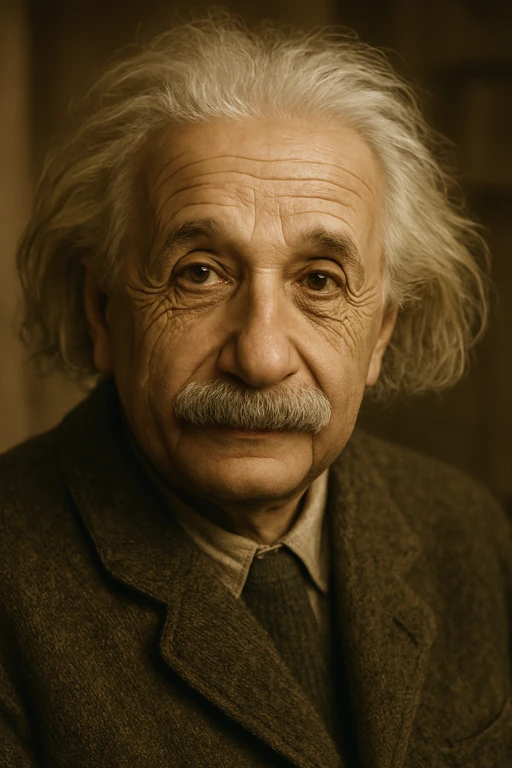
"If you want your children to be intelligent, read them fairy tales. If you want them to be more intelligent, read them more fairy tales."
— Albert Einstein
If You Want Your Children To Be Intelligent Read
If you want your children to be intelligent, read them fairy tales. If you want them to be more intelligent, read them more fairy tales.
Similar Quotes
Reading, after a certain age, diverts the mind too much from its creative pursuits. Any man who reads too much and uses his own brain too little falls into lazy habits of thinking.
“Reading, after a certain age, diverts the mind too much from its creative pursuits. Any man who reads too much and uses his own brain too little falls into lazy habits of thinking.”
Imagination is more important than knowledge
Do not grow old, no matter how long you live. Never cease to stand like curious children before the Great Mystery into which we were born.
We are in the position of a little child entering a huge library, whose walls are covered to the ceiling with books in many different languages. The child knows that someone must have written those books. It does not know who or how. It does not understand the the languages in which they are written. The child notes a definite plan in the arrangement of the books, a mysterious order, which it does not comprehend but only dimly suspects.
“It sounds like a fairy-tale, but not only that; this story of what man by his science and practical inventions has achieved on this earth, where he first appeared as a weakly member of the animal kingdom, and on which each individual of his species must ever again appear as a helpless infant... is a direct fulfilment of all, or of most, of the dearest wishes in his fairy-tales. All these possessions he has acquired through culture. Long ago he formed an ideal conception of omnipotence and omniscience which he embodied in his gods. Whatever seemed unattainable to his desires - or forbidden to him - he attributed to these gods. One may say, therefore, that these gods were the ideals of his culture. Now he has himself approached very near to realizing this ideal, he has nearly become a god himself. But only, it is true, in the way that ideals are usually realized in the general experience of humanity. Not completely; in some respects not at all, in others only by halves. Man has become a god by means of artificial limbs, so to speak, quite magnificent when equipped with all his accessory organs; but they do not grow on him and they still give him trouble at times... Future ages will produce further great advances in this realm of culture, probably inconceivable now, and will increase man's likeness to a god still more.”