
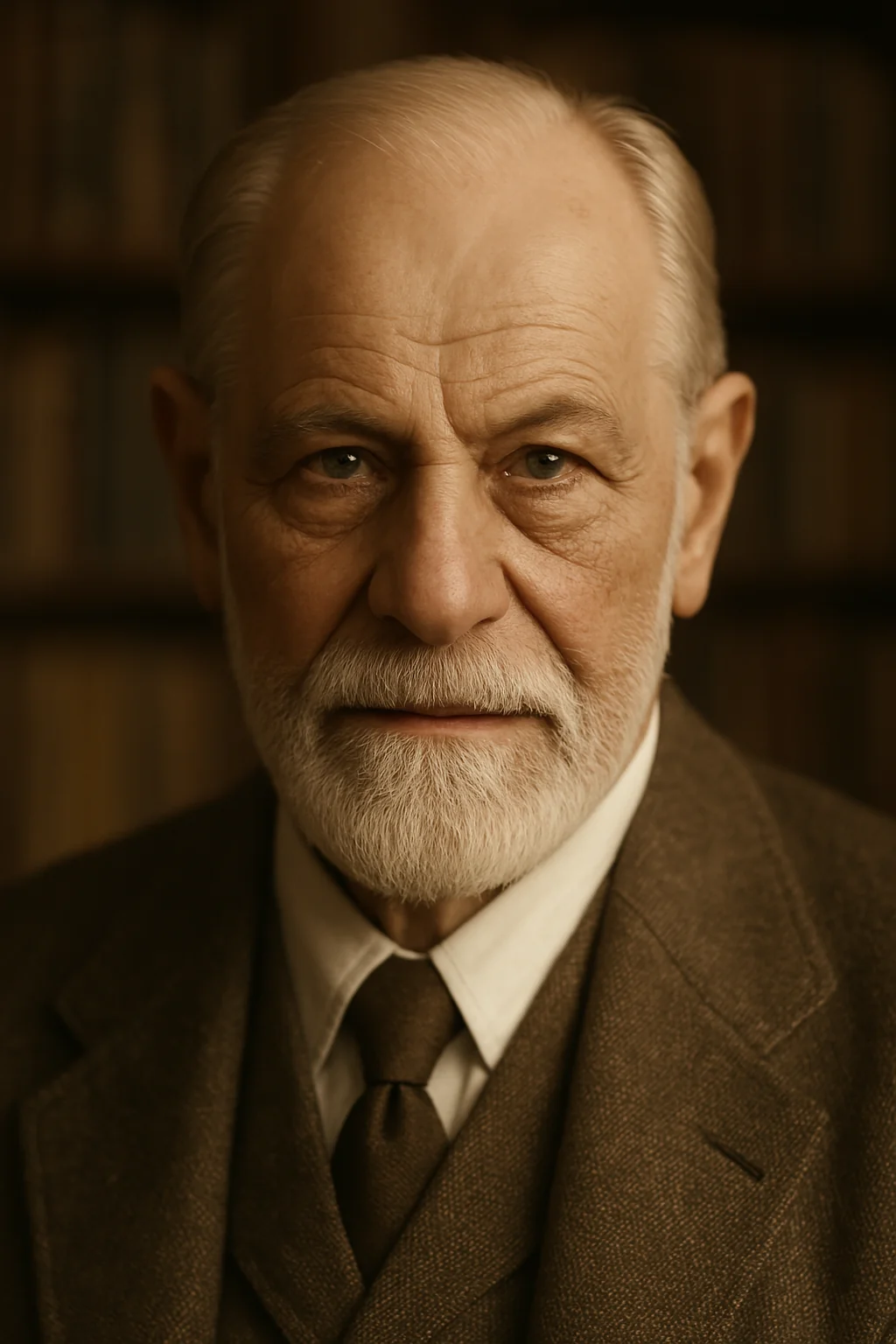
"“Actually, the substitution of the reality-principle for the pleasure-principle denotes no dethronement of the pleasure-principle, but only a safeguarding of it. A momentary pleasure, uncertain in its results, is given up, but only in order to gain in the new way an assured pleasure coming later. But the end psychic impression made by this substitution has been so powerful that it is mirrored in a special religious myth. The doctrine of reward in a future life for the—voluntary or enforced—renunciation of earthly lusts is nothing but a mythical projection of this revolution in the mind. In logical pursuit of this prototype, religions have been able to effect the absolute renunciation of pleasure in this life by means of the promise of compensation in a future life; they have not, however, achieved a conquest of the pleasure-principle this way. It is science which comes nearest to succeeding in this conquest; science, however, also offers intellectual pleasure during its work and promises practical gain at the end.”"
— Sigmund Freud
Actually The Substitution Of The Reality Principle
“Actually, the substitution of the reality-principle for the pleasure-principle denotes no dethronement of the pleasure-principle, but only a safeguarding of it. A momentary pleasure, uncertain in its results, is given up, but only in order to gain in the new way an assured pleasure coming later. But the end psychic impression made by this substitution has been so powerful that it is mirrored in a special religious myth. The doctrine of reward in a future life for the—voluntary or enforced—renunciation of earthly lusts is nothing but a mythical projection of this revolution in the mind. In logical pursuit of this prototype, religions have been able to effect the absolute renunciation of pleasure in this life by means of the promise of compensation in a future life; they have not, however, achieved a conquest of the pleasure-principle this way. It is science which comes nearest to succeeding in this conquest; science, however, also offers intellectual pleasure during its work and promises practical gain at the end.”
Similar Quotes
“When, therefore, we maintain that pleasure is the end, we do not mean the pleasures of profligates and those that consist in sensuality, as is supposed by some who are either ignorant or disagree with us or do not understand, but freedom from pain in the body and from trouble in the mind. For it is not continuous drinkings and revelings, nor the satisfaction of lusts, nor the enjoyment of fish and other luxuries of the wealthy table, which produce a pleasant life, but sober reasoning, searching out the motives for all choice and avoidance, and banishing mere opinions, to which are due the greatest disturbance of the spirit.”
“That bodies should be lent us, while they can afford us pleasure, assist us in acquiring knowledge, or doing good to our fellow creatures, is a kind and benevolent act of God - when they become unfit for these purposes and afford us pain instead of pleasure-instead of an aid, become an encumbrance and answer none of the intentions for which they were given, it is equally kind and benevolent that a way is provided by which we may get rid of them. Death is that way.”
“Observe the difference between your attitude to illusions and mine. You have to defend the religious illusion with all your might. If it becomes discredited - and indeed the threat to it is great enough - then your world collapses. There is nothing left for you but to despair of everything, of civilization and the future of mankind. From that bondage I am, we are, free. Since we are prepared to renounce a good part of our infantile wishes, we can bear it if a few of our expectations turn out to be illusions.”
“No other technique for the conduct of life attaches the individual so firmly to reality as laying emphasis on work; for his work at least gives him a secure place in a portion of reality, in the human community. The possibility it offers of displacing a large amount of libidinal components, whether narcissistic, aggressive or even erotic, on to professional work and on to the human relations connected with it lends it a value by no means second to what it enjoys as something indispensible to the preservation and justification of existence in society. Professional activity is a source of special satisfaction if it is a freely chosen one — if, that is to say, by means of sublimation, it makes possible the use of existing inclinations, of persisting or constitutionally reinforced instinctual impulses. And yet, as a path to happiness, work is not highly prized by men. They do not strive after it as they do after other possibilities of satisfaction. The great majority of people only work under the stress of necessity, and this natural human aversion to work raises most difficult social problems.”
It seems to me that the idea of a personal God is an anthropological concept which I cannot take seriously. I also cannot imagine some will or goal outside the human sphere... Science has been charged with undermining morality, but the charge is unjust. A man's ethical behavior should be based effectually on sympathy, education, and social ties and needs; no religious basis is necessary. Man would indeed be in a poor way if he had to be restrained by fear of punishment and hope of reward after death.
“Religion is an attempt to get control over the sensory world, in which we are placed, by means of the wish-world, which we have developed inside us as a result of biological and psychological necessities. But it cannot achieve its end. Its doctrines carry with them the stamp of the times in which they originated, the ignorant childhood days of the human race. Its consolations deserve no trust. Experience teaches us that the world is not a nursery. The ethical commands, to which religion seeks to lend its weight, require some other foundations instead, for human society cannot do without them, and it is dangerous to link up obedience to them with religious belief. If one attempts to assign to religion its place in man’s evolution, it seems not so much to be a lasting acquisition, as a parallel to the neurosis which the civilized individual must pass through on his way from childhood to maturity.”