
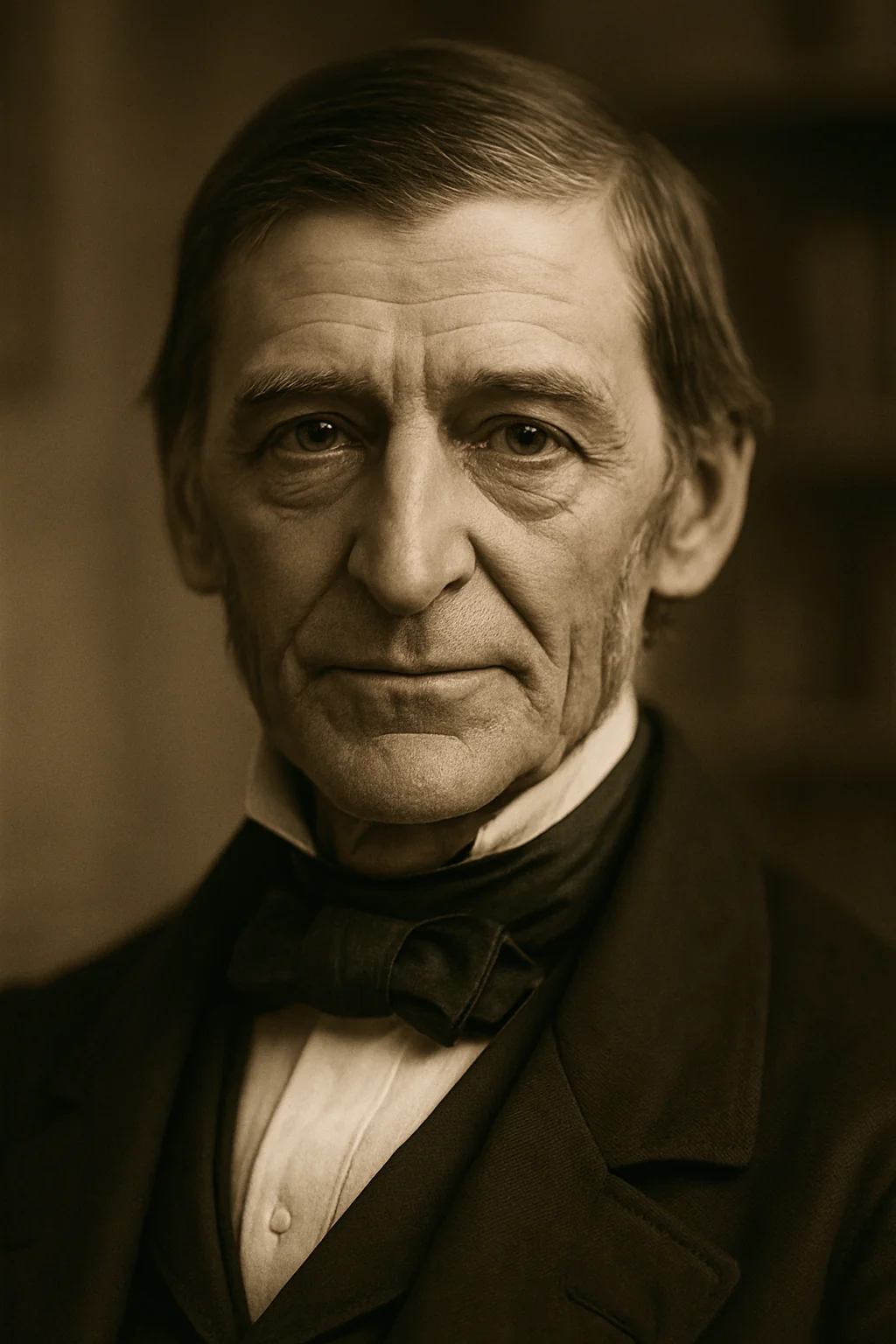
"“Emerson's own best insight into fame is in his essay on Character. "The most dismaying aspect of fame from the point of view of its possessor is not just that fame is generally disproportionate to actual achievement, but that the fame that we first assume to be a reward for work well done becomes instead an impossible promise of about future work. Fame casts an anticipatory chill over current efforts because it awakens expectations that can never fully be met".”"
— Ralph Waldo Emerson
Emersons Own Best Insight Into Fame Is In His
“Emerson's own best insight into fame is in his essay on Character. "The most dismaying aspect of fame from the point of view of its possessor is not just that fame is generally disproportionate to actual achievement, but that the fame that we first assume to be a reward for work well done becomes instead an impossible promise of about future work. Fame casts an anticipatory chill over current efforts because it awakens expectations that can never fully be met".”
Similar Quotes
“Success has always been the greatest liar - and the "work" itself is a success; the great statesman, the conqueror, the discoverer is disguised by his creations, often beyond recognition; the "work," whether of the artist or the philosopher, invents the man who has created it, who is supposed to have create it; "great men," as they are venerated, are subsequent pieces of wretched minor fiction”
“No other technique for the conduct of life attaches the individual so firmly to reality as laying emphasis on work; for his work at least gives him a secure place in a portion of reality, in the human community. The possibility it offers of displacing a large amount of libidinal components, whether narcissistic, aggressive or even erotic, on to professional work and on to the human relations connected with it lends it a value by no means second to what it enjoys as something indispensible to the preservation and justification of existence in society. Professional activity is a source of special satisfaction if it is a freely chosen one — if, that is to say, by means of sublimation, it makes possible the use of existing inclinations, of persisting or constitutionally reinforced instinctual impulses. And yet, as a path to happiness, work is not highly prized by men. They do not strive after it as they do after other possibilities of satisfaction. The great majority of people only work under the stress of necessity, and this natural human aversion to work raises most difficult social problems.”
“It is impossible to escape the impression that people commonly use false standards of measurement — that they seek power, success and wealth for themselves and admire them in others, and that they underestimate what is of true value in life.”
“The great source of both the misery and disorders of human life, seems to arise from over-rating the difference between one permanent situation and another. Avarice over-rates the difference between poverty and riches: ambition, that between a private and a public station: vain-glory, that between obscurity and extensive reputation. The person under the influence of any of those extravagant passions, is not only miserable in his actual situation, but is often disposed to disturb the peace of society, in order to arrive at that which he so foolishly admires. The slightest observation, however, might satisfy him, that, in all the ordinary situations of human life, a well-disposed mind may be equally calm, equally cheerful, and equally contented. Some of those situations may, no doubt, deserve to be preferred to others: but none of them can deserve to be pursued with that passionate ardour which drives us to violate the rules either of prudence or of justice; or to corrupt the future tranquillity of our minds, either by shame from the remembrance of our own folly, or by remorse from the horror of our own injustice.”
“The public make use of the classics of a country as a means of checking the progress of Art. They degrade the classics into authorities.... A fresh mode of Beauty is absolutely distasteful to them, and whenever it appears they get so angry and bewildered that they always use two stupid expressions--one is that the work of art is grossly unintelligible; the other, that the work of art is grossly immoral. What they mean by these words seems to me to be this. When they say a work is grossly unintelligible, they mean that the artist has said or made a beautiful thing that is new; when they describe a work as grossly immoral, they mean that the artist has said or made a beautiful thing that is true.”
“In consequence, when the pleasures have been removed which busy people derive from their actual activities, the mind cannot endure the house, the solitude, the walls, and hates to observe its own isolation. From this arises that boredom and self-dissatisfaction, that turmoil of a restless mind and gloomy and grudging endurance of our leisure, especially when we are ashamed to admit the reasons for it and our sense of shame drives the agony inward, and our desires are trapped in narrow bounds without escape and stifle themselves. From this arise melancholy and mourning and a thousand vacillations of a wavering mind, buoyed up by the birth of hope and sickened by the death of it. From this arises the state of mind of those who loathe their own leisure and complain that they have nothing to do, and the bitterest envy at the promotion of others. For unproductive idleness nurtures malice, and because they themselves could not prosper they want everyone else to be ruined. Then from this dislike of others' success and despair of their own, their minds become enraged against fortune, complain about the times, retreat into obscurity, and brood over their own sufferings until they become sick and tired of themselves.”