
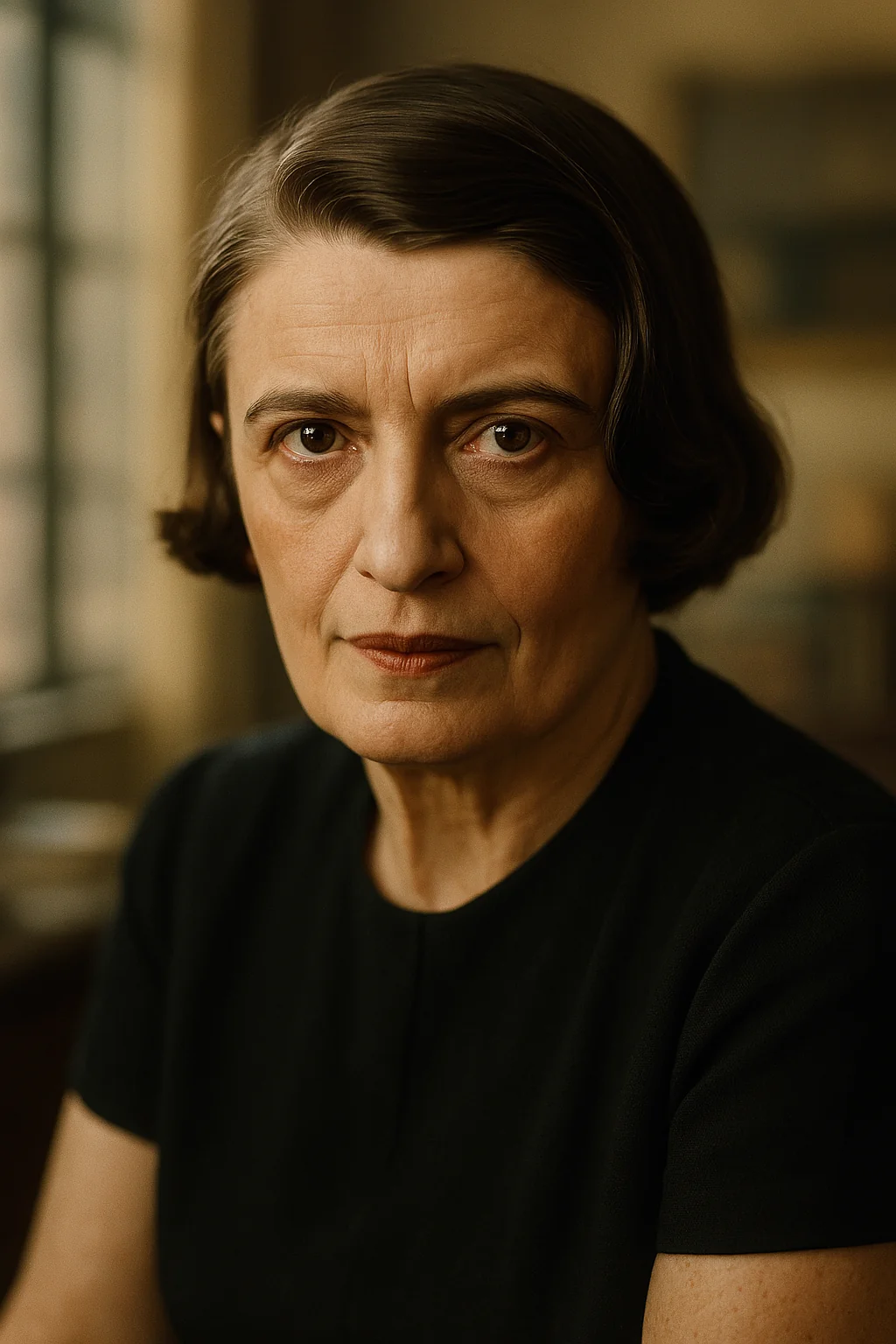
"“People, he thought, were as hungry for a sight of joy as he had always been--for a moment's relief from that gray load of suffering which seemed so inexplicable and unnecessary. He had never been able to understand why men should be unhappy.”"
— Ayn Rand
People He Thought Were As Hungry For A Sight Of
“People, he thought, were as hungry for a sight of joy as he had always been--for a moment's relief from that gray load of suffering which seemed so inexplicable and unnecessary. He had never been able to understand why men should be unhappy.”
happiness
Similar Quotes
“Listen to what is being preached today. Look at everyone around us. You've wondered why they suffer, why they seek happiness and never find it. If any man stopped and asked himself whether he's ever held a truly personal desire, he'd find the answer. He'd see that all his wishes, his efforts, his dreams, his ambitions are motivated by other men. He's not really struggling even for material wealth, but for the second-hander's delusion - prestige. A stamp of approval, not his own. He can find no joy in the struggle and no joy when he has succeeded. He can't say about a single thing: 'This is what I wanted because I wanted it, not because it made my neighbors gape at me'. Then he wonders why he's unhappy.”
“I believe that if one man were to live out his life fully and completely, were to give form to every feeling, expression to every thought, reality to every dream - I believe that the world would gain such a fresh impulse of joy that we would forget all the maladies of medievalism, and return to the Hellenic ideal - to something finer, richer, than the Hellenic ideal, it may be. But the bravest man amongst us is afraid of himself. The mutilation of the savage has its tragic survival in the self-denial that mars our lives. We are punished for our refusals.”
“Our possibilities of happiness are already restricted by our constitution. Unhappiness is much less difficult to experience. We are threatened with suffering from three directions: from our own body, which is doomed to decay and dissolution and which cannot even do without pain and anxiety as warning signals; from the external world, which may rage against us with overwhelming and merciless forces of destruction; and finally from our relations to other men. The suffering which comes from this last source is perhaps more painful to us than any other.”
“The great source of both the misery and disorders of human life, seems to arise from over-rating the difference between one permanent situation and another. Avarice over-rates the difference between poverty and riches: ambition, that between a private and a public station: vain-glory, that between obscurity and extensive reputation. The person under the influence of any of those extravagant passions, is not only miserable in his actual situation, but is often disposed to disturb the peace of society, in order to arrive at that which he so foolishly admires. The slightest observation, however, might satisfy him, that, in all the ordinary situations of human life, a well-disposed mind may be equally calm, equally cheerful, and equally contented. Some of those situations may, no doubt, deserve to be preferred to others: but none of them can deserve to be pursued with that passionate ardour which drives us to violate the rules either of prudence or of justice; or to corrupt the future tranquillity of our minds, either by shame from the remembrance of our own folly, or by remorse from the horror of our own injustice.”
“The Thought of Death. It gives me a melancholy happiness to live in the midst of this confusion of streets, of necessities, of voices: how much enjoyment, impatience and desire, how much thirsty life and drunkenness of life comes to light here every moment! And yet it will soon be so still for all these shouting, lively, life- loving people! How everyone's shadow, his gloomy travelling companion stands behind him! It is always as in the last moment before the departure of an emigrant- ship: people have more than ever to say to one another, the hour presses, the ocean with its lonely silence waits impatiently behind all the noise-so greedy, so certain of its prey! And all, all, suppose that the past has been nothing, or a small matter, that the near future is everything: hence this haste, this crying, this self-deafening and self-overreaching! Everyone wants to be foremost in this future-and yet death and the stillness of death are the only things certain and common to all in this future! How strange that this sole thing that is certain and common to all, exercises almost no influence on men, and that they are the furthest from regarding themselves as the brotherhood of death! It makes me happy to see that men do not want to think at all of the idea of death! I would fain do something to make the idea of life to us to be more than friends in the sense of that sublime possibility. And so we will believe in our even a hundred times more worthy of their attention.”
“For those who are poor in happiness, each time is a first time; happiness never becomes a habit.”