
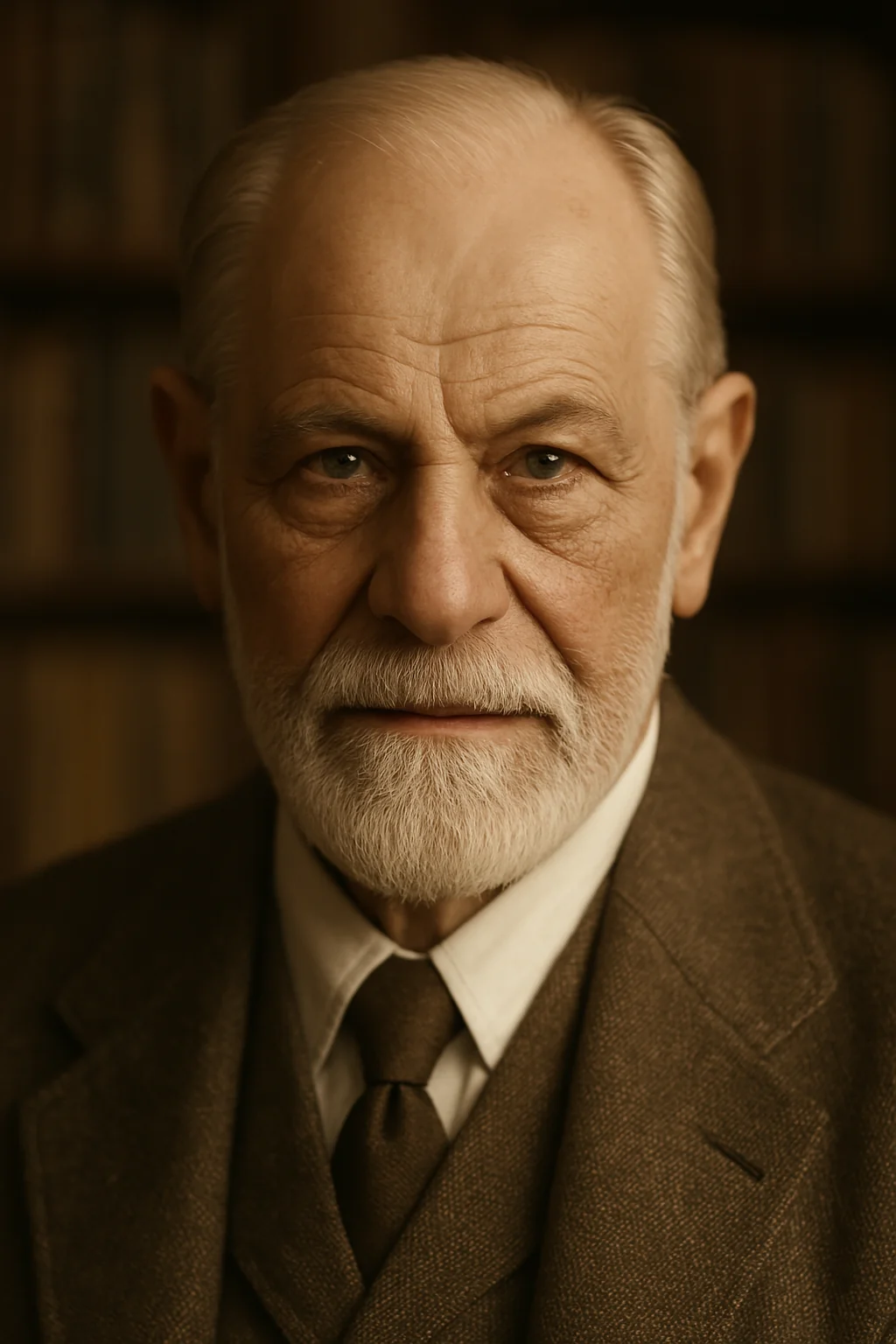
"“Our possibilities of happiness are already restricted by our constitution. Unhappiness is much less difficult to experience. We are threatened with suffering from three directions: from our own body, which is doomed to decay and dissolution and which cannot even do without pain and anxiety as warning signals; from the external world, which may rage against us with overwhelming and merciless forces of destruction; and finally from our relations to other men. The suffering which comes from this last source is perhaps more painful to us than any other.”"
— Sigmund Freud
Our Possibilities Of Happiness Are Already
“Our possibilities of happiness are already restricted by our constitution. Unhappiness is much less difficult to experience. We are threatened with suffering from three directions: from our own body, which is doomed to decay and dissolution and which cannot even do without pain and anxiety as warning signals; from the external world, which may rage against us with overwhelming and merciless forces of destruction; and finally from our relations to other men. The suffering which comes from this last source is perhaps more painful to us than any other.”
Similar Quotes
“The great source of both the misery and disorders of human life, seems to arise from over-rating the difference between one permanent situation and another. Avarice over-rates the difference between poverty and riches: ambition, that between a private and a public station: vain-glory, that between obscurity and extensive reputation. The person under the influence of any of those extravagant passions, is not only miserable in his actual situation, but is often disposed to disturb the peace of society, in order to arrive at that which he so foolishly admires. The slightest observation, however, might satisfy him, that, in all the ordinary situations of human life, a well-disposed mind may be equally calm, equally cheerful, and equally contented. Some of those situations may, no doubt, deserve to be preferred to others: but none of them can deserve to be pursued with that passionate ardour which drives us to violate the rules either of prudence or of justice; or to corrupt the future tranquillity of our minds, either by shame from the remembrance of our own folly, or by remorse from the horror of our own injustice.”
“Happiness depends upon ourselves.”
“Happiness is not to be achieved at the command of emotional whims. Happiness is not the satisfaction of whatever irrational wishes you might blindly attempt to indulge. Happiness is a state of non-contradictory joy—a joy without penalty or guilt, a joy that does not clash with any of your values and does not work for your own destruction, not the joy of escaping from your mind, but of using your mind's fullest power, not the joy of faking reality, but of achieving values that are real, not the joy of a drunkard, but of a producer. Happiness is possible only to a rational man, the man who desires nothing but rational goals, seeks nothing but rational values and finds his joy in nothing but rational actions.”
“Happiness: being able to forget or, to express in a more learned fashion.”
“In consequence, when the pleasures have been removed which busy people derive from their actual activities, the mind cannot endure the house, the solitude, the walls, and hates to observe its own isolation. From this arises that boredom and self-dissatisfaction, that turmoil of a restless mind and gloomy and grudging endurance of our leisure, especially when we are ashamed to admit the reasons for it and our sense of shame drives the agony inward, and our desires are trapped in narrow bounds without escape and stifle themselves. From this arise melancholy and mourning and a thousand vacillations of a wavering mind, buoyed up by the birth of hope and sickened by the death of it. From this arises the state of mind of those who loathe their own leisure and complain that they have nothing to do, and the bitterest envy at the promotion of others. For unproductive idleness nurtures malice, and because they themselves could not prosper they want everyone else to be ruined. Then from this dislike of others' success and despair of their own, their minds become enraged against fortune, complain about the times, retreat into obscurity, and brood over their own sufferings until they become sick and tired of themselves.”
“Accustom yourself to the belief that death is of no concern to us, since all good and evil lie in sensation and sensation ends with death. Therefore the true belief that death is nothing to us makes a mortal life happy, not by adding to it an infinite time, but by taking away the desire for immortality. For there is no reason why the man who is thoroughly assured that there is nothing to fear in death should find anything to fear in life. So, too, he is foolish who says that he fears death, not because it will be painful when it comes, but because the anticipation of it is painful; for that which is no burden when it is present gives pain to no purpose when it is anticipated. Death, the most dreaded of evils, is therefore of no concern to us; for while we exist death is not present, and when death is present we no longer exist. It is therefore nothing either to the living or to the dead since it is not present to the living, and the dead no longer are.”