
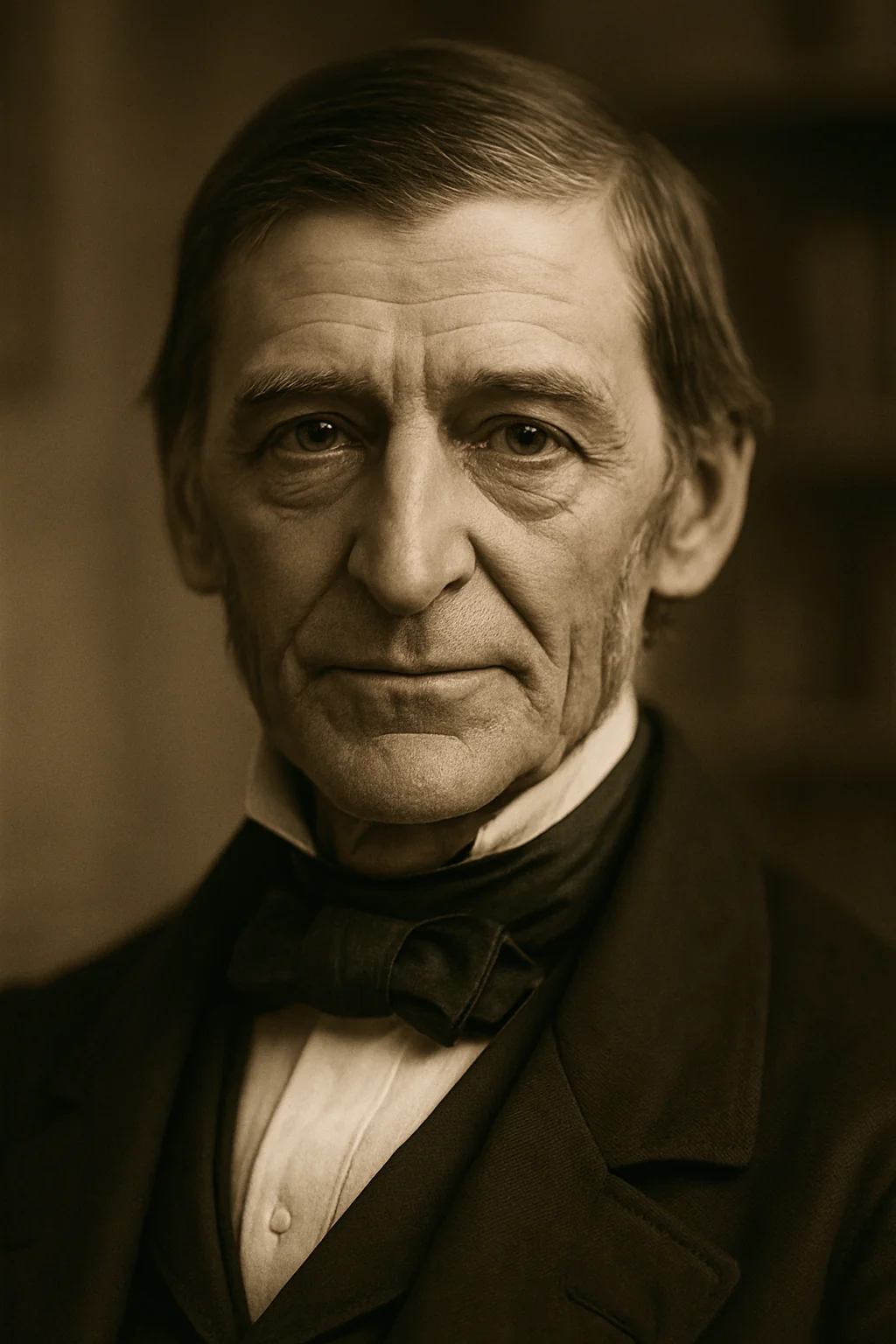
"“Doubt not, O poet, but persist. Say 'It is in me, and shall out.' Stand there, balked and dumb, stuttering and stammering, hissed and hooted, stand and strive, until at last rage draw out of thee that dream-power which every night shows thee is thine own; a power transcending all limit and privacy, and by virtue of which a man is the conductor of the whole river of electricity.”"
— Ralph Waldo Emerson
Doubt Not O Poet But Persist Say It Is In Me And
“Doubt not, O poet, but persist. Say 'It is in me, and shall out.' Stand there, balked and dumb, stuttering and stammering, hissed and hooted, stand and strive, until at last rage draw out of thee that dream-power which every night shows thee is thine own; a power transcending all limit and privacy, and by virtue of which a man is the conductor of the whole river of electricity.”
Similar Quotes
“All bad poetry springs from genuine feeling. To be natural is to be obvious, and to be obvious is to be inartistic.”
“I have been in my bed for five weeks, oppressed with weakness and other infirmities from which my age, seventy four years, permits me not to hope release. Added to this (proh dolor! [O misery!]) the sight of my right eye — that eye whose labors (dare I say it) have had such glorious results — is for ever lost. That of the left, which was and is imperfect, is rendered null by continual weeping.”
“I believe that if one man were to live out his life fully and completely, were to give form to every feeling, expression to every thought, reality to every dream - I believe that the world would gain such a fresh impulse of joy that we would forget all the maladies of medievalism, and return to the Hellenic ideal - to something finer, richer, than the Hellenic ideal, it may be. But the bravest man amongst us is afraid of himself. The mutilation of the savage has its tragic survival in the self-denial that mars our lives. We are punished for our refusals.”
“When, therefore, we maintain that pleasure is the end, we do not mean the pleasures of profligates and those that consist in sensuality, as is supposed by some who are either ignorant or disagree with us or do not understand, but freedom from pain in the body and from trouble in the mind. For it is not continuous drinkings and revelings, nor the satisfaction of lusts, nor the enjoyment of fish and other luxuries of the wealthy table, which produce a pleasant life, but sober reasoning, searching out the motives for all choice and avoidance, and banishing mere opinions, to which are due the greatest disturbance of the spirit.”
“The poet knows that he speaks adequately, then, only when he speaks somewhat wildly.”
“The Thought of Death. It gives me a melancholy happiness to live in the midst of this confusion of streets, of necessities, of voices: how much enjoyment, impatience and desire, how much thirsty life and drunkenness of life comes to light here every moment! And yet it will soon be so still for all these shouting, lively, life- loving people! How everyone's shadow, his gloomy travelling companion stands behind him! It is always as in the last moment before the departure of an emigrant- ship: people have more than ever to say to one another, the hour presses, the ocean with its lonely silence waits impatiently behind all the noise-so greedy, so certain of its prey! And all, all, suppose that the past has been nothing, or a small matter, that the near future is everything: hence this haste, this crying, this self-deafening and self-overreaching! Everyone wants to be foremost in this future-and yet death and the stillness of death are the only things certain and common to all in this future! How strange that this sole thing that is certain and common to all, exercises almost no influence on men, and that they are the furthest from regarding themselves as the brotherhood of death! It makes me happy to see that men do not want to think at all of the idea of death! I would fain do something to make the idea of life to us to be more than friends in the sense of that sublime possibility. And so we will believe in our even a hundred times more worthy of their attention.”