
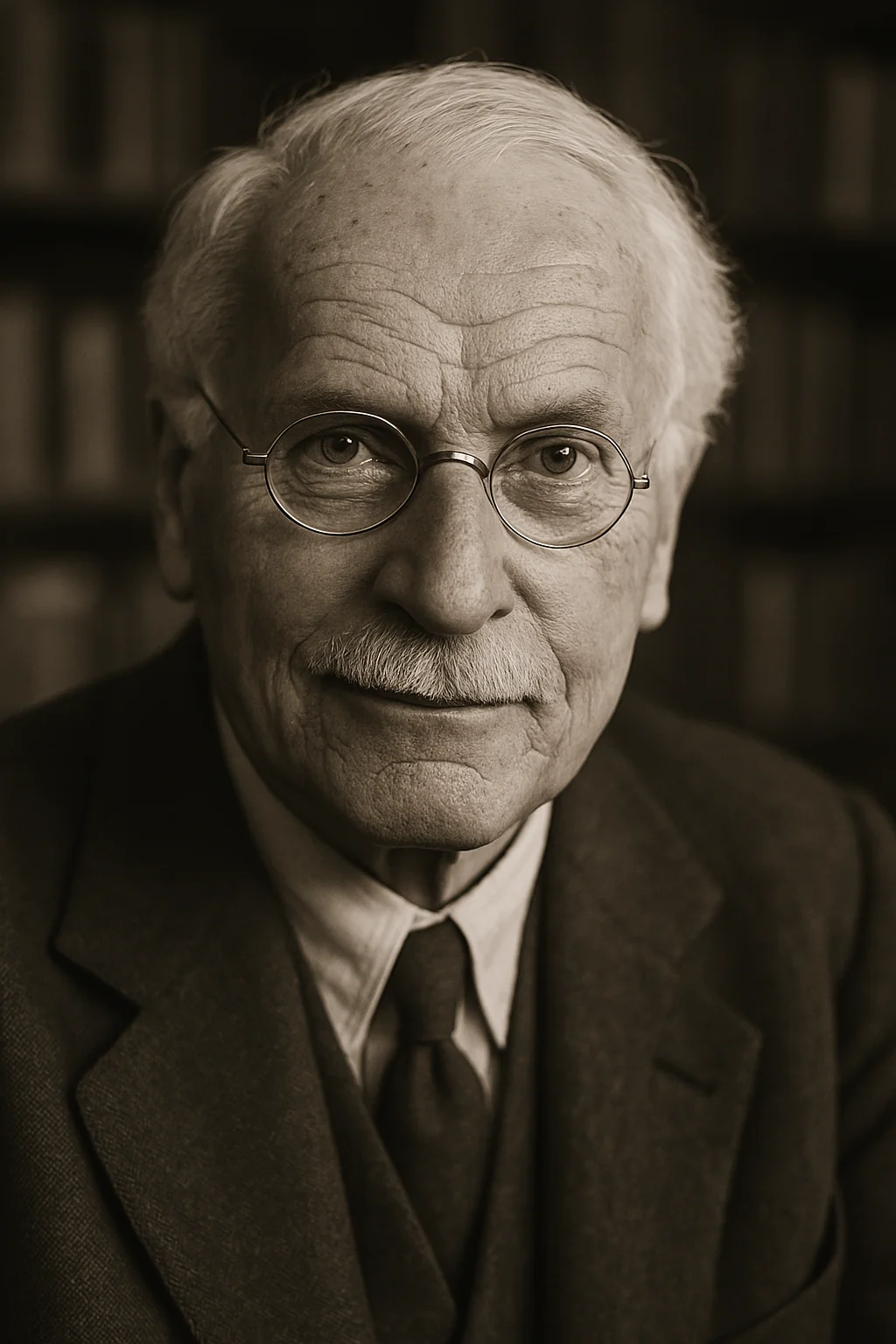
"“But it seems to me to be an imperfection in things of beauty, and a weakness in man, if an explanation from the shallow-side has a destructive effect. The horror which we feel for Freudian interpretations is entirely due to our own barbaric or childish naivete, which believes that there can be heights without corresponding depths, and which blinds us to the really "final" truth that, when carried to extremes, opposites meet.”"
— Carl Jung
But It Seems To Me To Be An Imperfection In Things
“But it seems to me to be an imperfection in things of beauty, and a weakness in man, if an explanation from the shallow-side has a destructive effect. The horror which we feel for Freudian interpretations is entirely due to our own barbaric or childish naivete, which believes that there can be heights without corresponding depths, and which blinds us to the really "final" truth that, when carried to extremes, opposites meet.”
Similar Quotes
“I believe that if one man were to live out his life fully and completely, were to give form to every feeling, expression to every thought, reality to every dream - I believe that the world would gain such a fresh impulse of joy that we would forget all the maladies of medievalism, and return to the Hellenic ideal - to something finer, richer, than the Hellenic ideal, it may be. But the bravest man amongst us is afraid of himself. The mutilation of the savage has its tragic survival in the self-denial that mars our lives. We are punished for our refusals.”
“Perhaps the hopes I have confessed to are of an illusory nature, too. But I hold fast to one distinction. Apart from the fact that no penalty is imposed for not sharing them, my illusions are not, like religious ones, incapable of correction.”
“Why is thought being a secretion of brain, more wonderful than gravity a property of matter? It is our arrogance, our admiration of ourselves.”
“Observe the difference between your attitude to illusions and mine. You have to defend the religious illusion with all your might. If it becomes discredited - and indeed the threat to it is great enough - then your world collapses. There is nothing left for you but to despair of everything, of civilization and the future of mankind. From that bondage I am, we are, free. Since we are prepared to renounce a good part of our infantile wishes, we can bear it if a few of our expectations turn out to be illusions.”
“The great source of both the misery and disorders of human life, seems to arise from over-rating the difference between one permanent situation and another. Avarice over-rates the difference between poverty and riches: ambition, that between a private and a public station: vain-glory, that between obscurity and extensive reputation. The person under the influence of any of those extravagant passions, is not only miserable in his actual situation, but is often disposed to disturb the peace of society, in order to arrive at that which he so foolishly admires. The slightest observation, however, might satisfy him, that, in all the ordinary situations of human life, a well-disposed mind may be equally calm, equally cheerful, and equally contented. Some of those situations may, no doubt, deserve to be preferred to others: but none of them can deserve to be pursued with that passionate ardour which drives us to violate the rules either of prudence or of justice; or to corrupt the future tranquillity of our minds, either by shame from the remembrance of our own folly, or by remorse from the horror of our own injustice.”
“You have killed my love. You used to stir my imagination. Now you don't even stir my curiosity. You simply produce no effect. I loved you because you were marvelous, because you had genius and intellect, because you realized the dreams of great poets and gave shape and substance to the shadows of art. You have thrown it all away. You are shallow and stupid”