Quotations
Humanity's wisdom distilled - timeless quotes that inspire, motivate, educate and make you think.
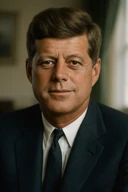
John F. Kennedy
Forgive your enemies, but never forget their names.
John F. Kennedy
The rights of every man are diminished when the rights of one man are threatened.
John F. Kennedy
Ask not what your country can do for you; ask what you can do for your country.
John F. Kennedy
We must find time to stop and thank the people who make a difference in our lives.
John F. Kennedy
As we express our gratitude, we must never forget that the highest appreciation is not to utter words, but to live by th...
John F. Kennedy
The great enemy of truth is very often not the lie--deliberate, contrived and dishonest--but the myth--persistent, persu...
John F. Kennedy
Victory has a hundred fathers and defeat is an orphan.
John F. Kennedy
If a free society cannot help the many who are poor, it cannot save the few who are rich.
John F. Kennedy
Do not pray for easy lives. Pray to be stronger men.
John F. Kennedy
If this nation is to be wise as well as strong, if we are to achieve our destiny, then we need more new ideas for more w...
John F. Kennedy
[Public] libraries should be open to all—except the censor.
John F. Kennedy
One person can make a difference, and everyone should try.
John F. Kennedy
If we cannot end now our differences, at least we can help make the world safe for diversity.
John F. Kennedy
Change is the law of life. And those who look only to the past or the present are certain to miss the future.
John F. Kennedy
Let us never negotiate out of fear. But let us never fear to negotiate.
John F. Kennedy
Mankind must put an end to war - or war will put an end to mankind.
John F. Kennedy
I believe in an America where the separation of church and state is absolute - where no Catholic prelate would tell the ...
John F. Kennedy
Let us not seek the Republican answer or the Democratic answer, but the right answer. Let us not seek to fix the blame f...
John F. Kennedy
We choose to go to the moon in this decade and do the other things, not because they are easy, but because they are hard...
John F. Kennedy
The Chinese use two brush strokes to write the word 'crisis.' One brush stroke stands for danger; the other for opportun...